
Criminal Court Cases in Clark County
Clark County sits in Idaho's Seventh Judicial District. The District Court has felony jurisdiction, while its Magistrate Division handles misdemeanor cases and the early parts of felony matters, including initial appearances and preliminary proceedings. A Dubois municipal matter may involve a city ordinance or traffic issue. Because the city does not publish its own case portal, confirm the current assignment with the Clark County clerk instead of assuming which court holds the record.
The Clerk of the District Court is custodian of the filed case record. Use the Clark County District Court page for the local starting point and call the court at 208-374-5402. The clerk can help locate a case index, register of actions, complaint, order, judgment, sentence, plain copy, or certified copy. Copy and certification prices are not published on the county page, so request a quote based on the exact document and format.
The official county court page illustrates the local entry point.
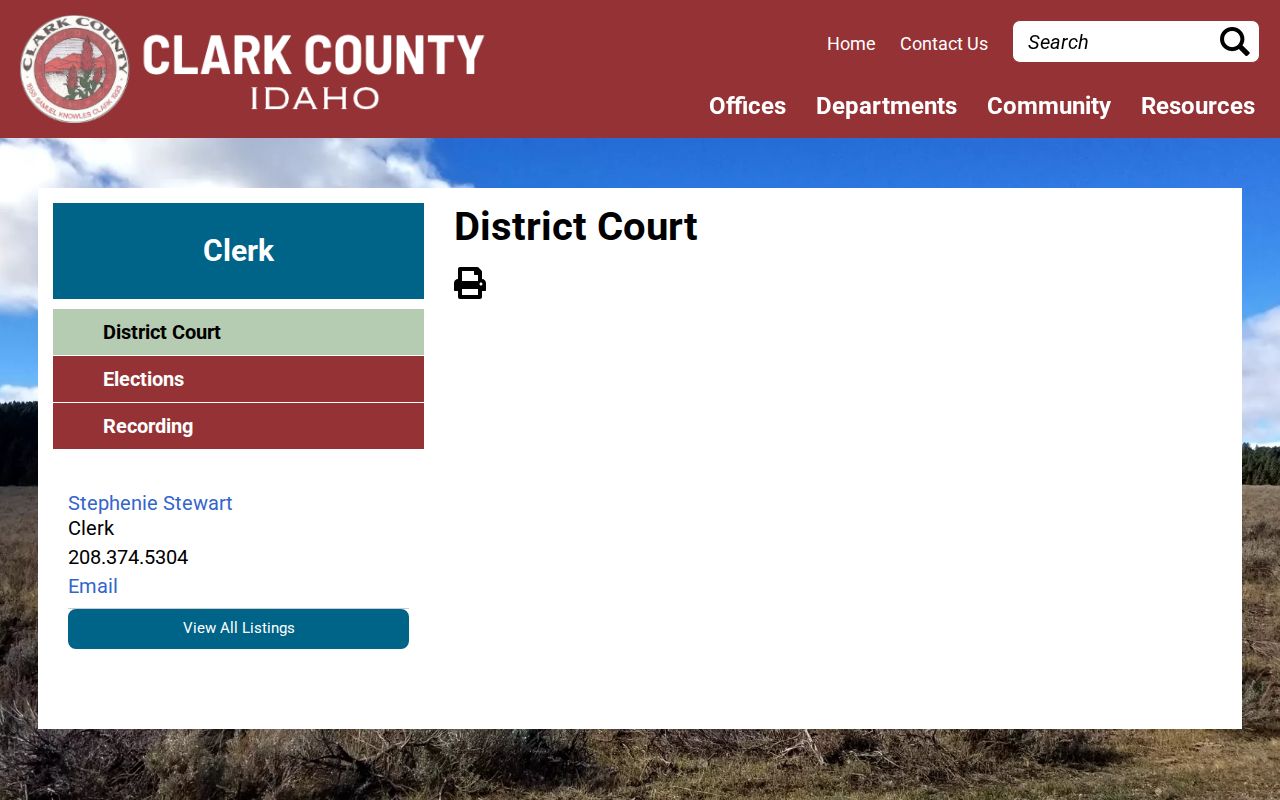
It reinforces that Clark County court records belong with the clerk, not with a prosecutor or private search service.
Clark County Court Divisions
A felony can touch both divisions. Magistrate proceedings address the first appearance, custody, counsel, and preliminary process. If the felony continues, an information or indictment moves the prosecution into District Court for arraignment, motions, plea or trial, judgment, and sentence. Misdemeanors generally remain in the Magistrate Division. The portal label, charging document, and judgment should be read together because a generic search result may not explain the procedural handoff.
The Idaho courthouse directory lists the Clark County court and its official channels.
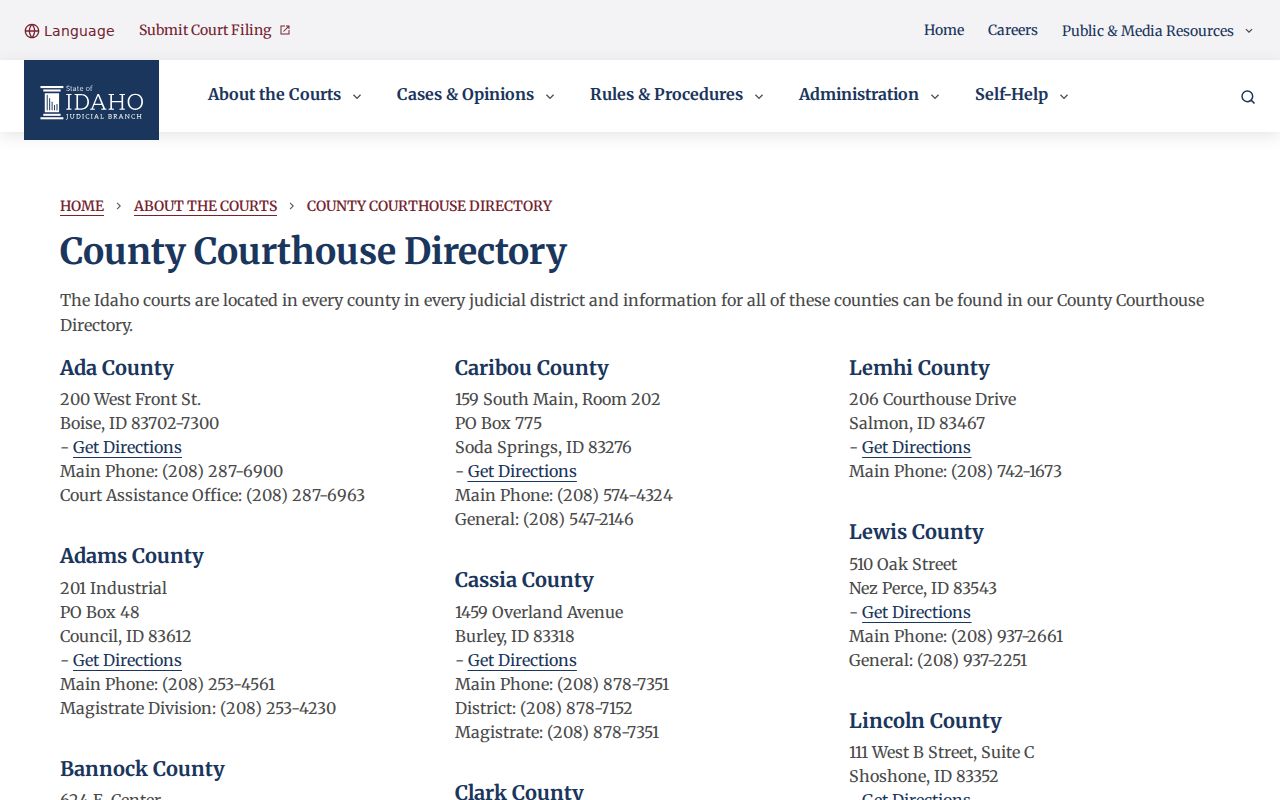
The directory is also useful before travel because official sources conflict on whether the street number is 224 or 320 West Main. Call the court first.
Clark County Case Record Searches
The Idaho iCourt Portal supplies free public trial-court case information statewide. Search it first, but treat a name match as a candidate until identity and county are confirmed. Common names, prior names, and limited public identifiers can create false matches. A case number is usually the strongest key.
- Open iCourt and choose a record-number or name search.
- Enter the full case number when known, or use legal first and last names.
- Review the court location, filing date, case type, and party role.
- Open the events, charges, hearings, and disposition fields.
- Call the Clark County clerk for missing documents or certified copies.
| Field | Type | Use | Clark County note |
|---|---|---|---|
| Record Number | Text | Conditional | Best when the complete case number is known |
| Last Name | Text | Conditional | Use the legal surname |
| First Name | Text | Optional | Narrows common-name results |
| Middle Name | Text | Optional | Helps distinguish candidates |
| Case Number | Text | Conditional | Keep punctuation shown on the notice |
The Idaho iCourt Portal is the official search interface.
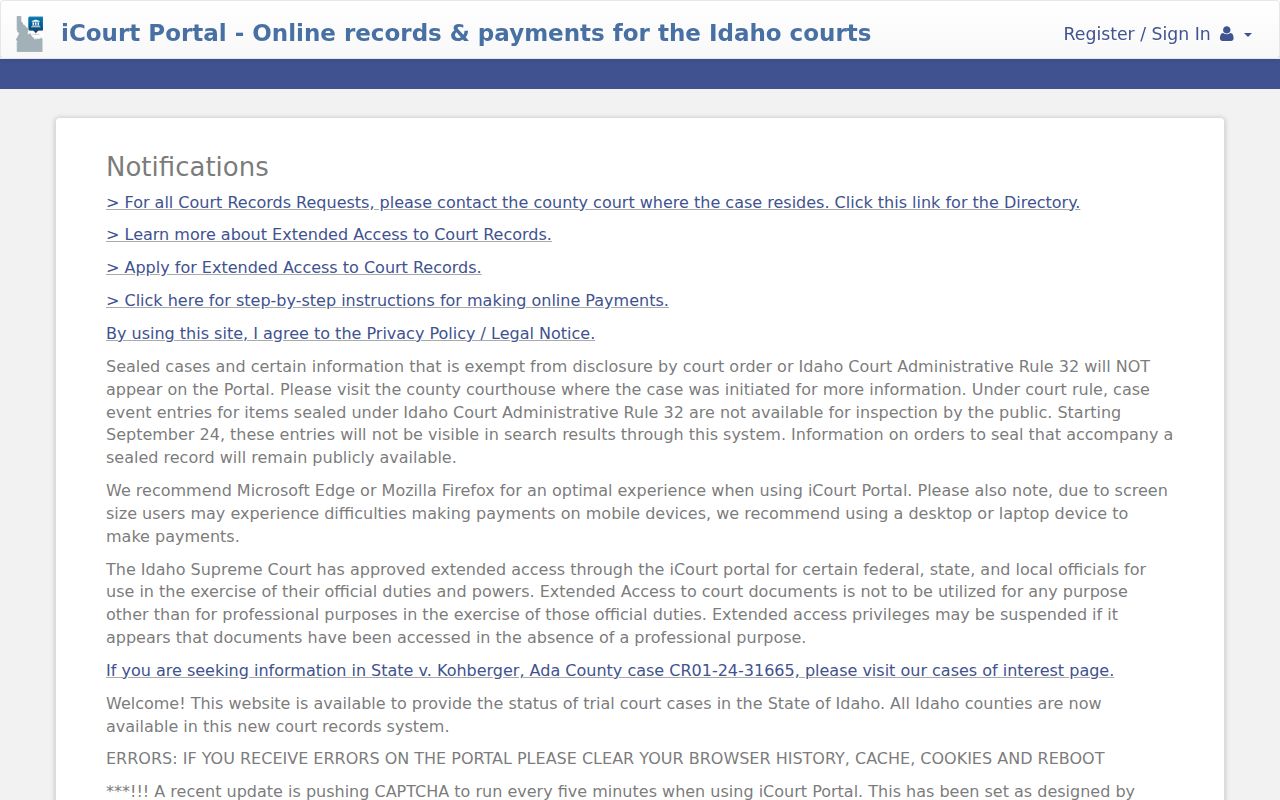
Portal labels may change during Idaho's announced 2026 public-interface refresh, but the clerk remains the document source.
Get Clark County Signed Orders
An iCourt event line is not always the signed document. If the result lists an order, judgment, sentence, warrant event, or dismissal without displaying the document, note the case number and exact event date. Ask the clerk whether a public electronic, paper, or certified copy is available. State guidance also points readers to courthouse kiosks, which may expose more case information than a remote view.
The Judicial Branch records guidance explains the roles of iCourt, kiosks, and filing-county clerks.
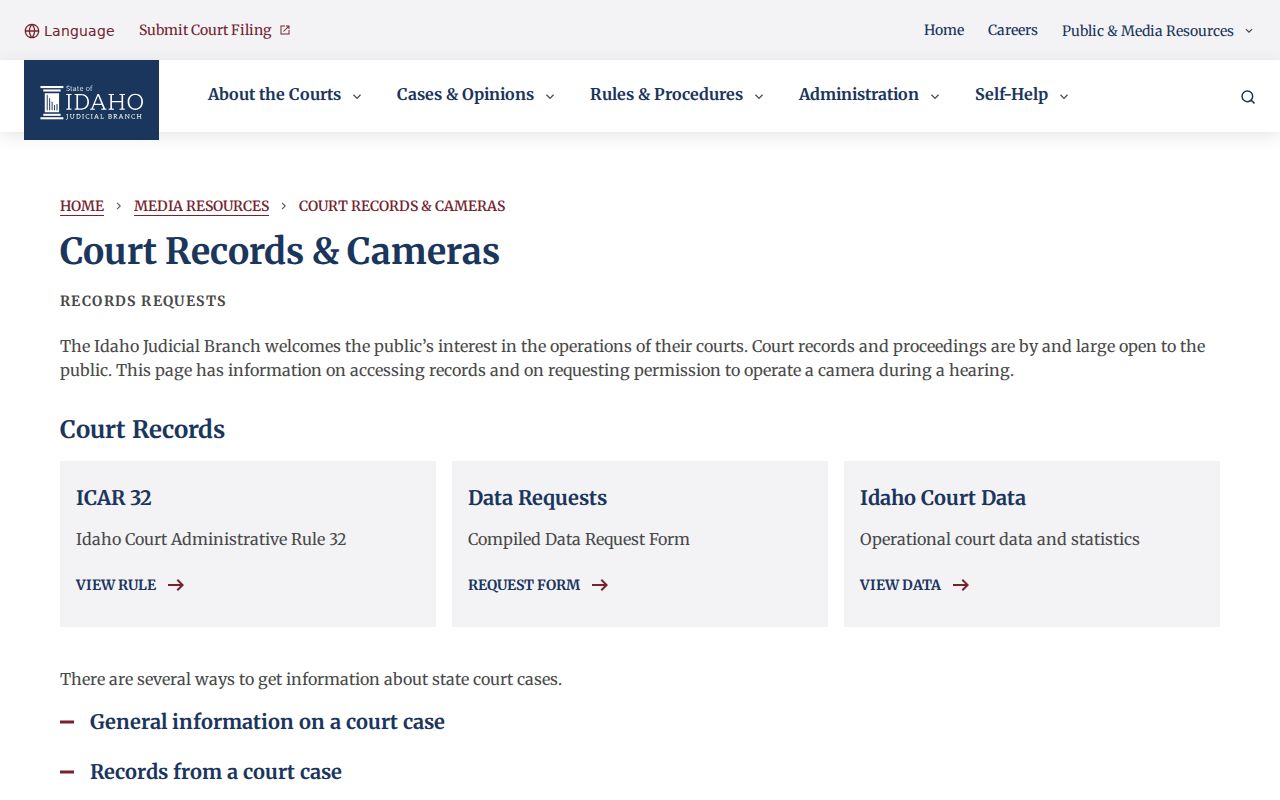
For one Clark County file, request the record locally. The separate compiled-data process is for broader datasets, not an ordinary case-copy order.
What a Criminal Case File Contains
A Clark County criminal court file records the prosecution, not merely the arrest allegation. It may show what charge the prosecutor filed, how each count changed, what hearings occurred, and how the court resolved the matter. Protected identifiers and restricted material will not appear in the public view.
| Case number and court | Unique file reference, location, case type, filing date, and status. |
|---|---|
| Charging document | Complaint, information, or indictment stating the filed counts. |
| Docket entries | Chronological register of filings, appearances, orders, pleas, and warrant events. |
| Hearings | Public date, time, type, judicial officer, and location when available. |
| Disposition | Outcome for each charge, such as dismissal, acquittal, plea, or verdict. |
| Judgment and sentence | Court's final order, custody, supervision, fines, restitution, or other terms. |
Financial assessments, payments, and balances may also appear. The signed judgment controls when a portal summary and filed order seem to differ.
Read Clark County Docket Terms
The register of actions is a time-ordered list, not a narrative. “Complaint” begins many cases. “Arraignment” is the hearing where charges and plea are addressed. “Disposition” means the result of a charge. “Dismissed” does not mean convicted, and it may not prevent refiling. “Acquitted” means a not-guilty determination after trial. An Idaho “withheld judgment” is a distinct procedure tied to probation and possible relief under Idaho Code §19-2604; it is not automatic erasure.
Status terms also need care. Active or pending describes an open case. Disposed or closed indicates that the court reached an endpoint, though appeal or later motions may follow. A warrant entry shows a court event, not necessarily current executable status. Verify a warrant with the court and Sheriff.
Criminal Case Stages in Clark County
A local case can begin with an investigation, citation, arrest, or filed complaint. The judge then addresses rights, custody, counsel, and release. Felony preliminary work occurs in the Magistrate Division before District Court proceedings. Motions, discovery, negotiation, trial, and post-judgment work vary by case, so not every file contains every stage.
Case flow: Charges Filed › Arraignment › Pretrial › Plea or Trial › Disposition › Sentencing
Filed counts may differ from the arresting officer's initial allegations because the prosecutor independently decides what to charge. To understand the earlier event as well as the prosecution, compare the docket with the official channels described in the Clark County Arrest Search.
Clark Court File or BCI Record
The court file and an Idaho BCI criminal history answer different questions. Clark County court records show a particular prosecution, its filings, hearings, result, and sentence. BCI compiles fingerprint-linked Idaho arrest cycles and the dispositions agencies report to the central repository. BCI does not provide the court's whole document file, other-state history, federal convictions, or a police narrative.
If a BCI result lacks a disposition that appears in Clark County court records, obtain the certified disposition from the clerk and ask BCI about correction. A court dismissal also does not by itself guarantee that every police, repository, and court record has been removed or shielded.
Match the source to the question. Use the complaint or information to identify the charge filed by the prosecutor. Read the register of actions for the sequence of hearings and orders. Obtain the judgment for the controlling disposition and sentence. Then compare those court facts with the BCI self-record. A late or missing agency report can leave the repository cycle without the result that already appears in the Clark County file.
Federal matters require a separate route. Clark County lies within the U.S. District Court for the District of Idaho, and PACER supplies federal dockets and filed documents after registration. An Idaho iCourt search will not return that federal case. Likewise, the FBI Identity History Summary is a person's own national fingerprint product and differs from both public PACER research and the Idaho BCI record.
When a reader needs proof of the outcome, a portal screen or repository summary may not be enough. Ask the Clark clerk for a certified judgment or dismissal and state why certification, rather than a plain copy, is needed. Since the county court page gives no copy or certification price, confirm the cost before ordering and do not rely on another Idaho county's fee schedule.
Access Rules for Clark County Cases
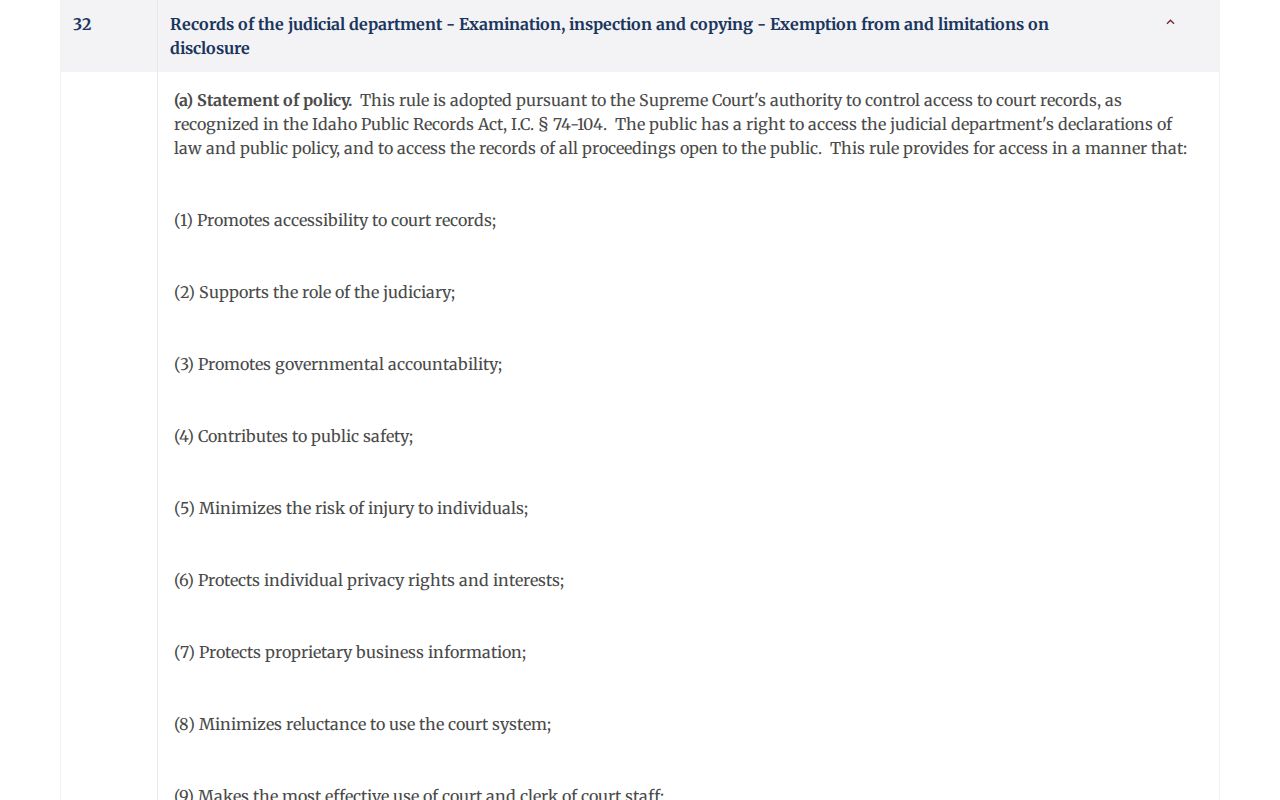
Idaho Court Administrative Rule 32 governs judicial records separately from ordinary executive-agency requests under the Idaho Public Records Act. Public access commonly covers the docket, charges, hearings, and outcomes, but sealed cases, juvenile material, protected personal identifiers, and other listed categories may be restricted. A blank portal screen therefore cannot prove that no event occurred.
The official ICAR 32 text states the governing classifications.
When a known case does not appear, give the clerk the case number, name, and approximate filing date. Ask whether the file is restricted, archived, or available only through a local request. Do not ask the prosecutor to act as custodian of the court file.
Clark County's Custodian Puzzle
Several justice contacts converge on Dubois, yet each office owns a different record. The clerk holds the judicial file. The Sheriff holds Clark County arrest, incident, booking, and custody records it created. Idaho BCI holds the statewide repository history, and IDOC holds state prison and adult felony supervision information. Being in one courthouse-centered system does not merge those files.
For a complete case question, begin with iCourt, confirm the case with the clerk, and request the exact signed document needed. Call 208-374-5402 before a rural trip because hours were not published and the official street-address sources conflict.